PROCESSING...

Anti-Money Laundering
Consulting Services & Strategies

0 Items - Total: $0.00 CAD

We Turn 12!

Green foil balloons forming the number 12 with gold confetti on a light background, celebrating a 12-year anniversary.Today marks another milestone for us – 12 years since Outlier Compliance Group was founded.

What began as a bold and novel idea, building a consulting firm made up exclusively of seasoned compliance professionals with deep in-house experience, has grown into a thriving, trusted partner for clients navigating Canada’s ever-changing regulatory landscape.

Our name, inspired by Malcolm Gladwell’s “Outliers, the Story of Success” which espoused the notion that to be truly proficient in a skill, 10,000 hours of practice is required. That was the bar that was set, met, and most often exceeded by every compliance professional that joined our team over the years.

Over the years, we’ve grown, evolved, but have stayed true to our roots. We’ve learned that success comes from surrounding ourselves with exceptional people, from listening closely to our clients, and from being willing to adapt in the face of change. We’ve discovered the value of curiosity when navigating complexity, and the power of collaboration when tackling the most challenging problems.

Through it all, our mission has remained the same “good compliance is good business”. It’s the principle that guides our work, shapes our advice, and underpins every solution we deliver.

As the Canadian regulatory environment becomes increasingly complex, our mission and our learnings will play to our continued success and growth as we continue to provide top tier compliance and risk management services. 

To our amazing team, past, present and future, thank you for your passion, expertise and resilience. To our clients, partners and industry peers, thank you for your trust and collaboration. Lastly, but by no means least, a special thank you to our CEO, David Vijan, and our Chairperson, Amber D. Scott, for keeping us on our toes and steering the ship with vision and purpose. 

Here’s to 12 years of achievement and to the future.

Integrity Over Profit

Earlier this week I was approached by a client with whom we had completed a full overhaul of their Risk Assessment documentation, which occurred about 3-4 months ago. The project was completed with excellent results, and from all accounts, an ideal outcome. Mainly, the client was satisfied with the deliverable, felt more confident in the status of their overall compliance program, and was a delight to work with.

When they reached out this week, they were inquiring about Outlier completing their upcoming 2 year Compliance Effectiveness Review (CER). This was a clear indication of their satisfaction, which was a good feeling. However, we had to keep in mind that we (Outlier) revised their Risk Assessment documentation not too long ago. After some internal discussion, we felt it was not the right move for us to take on their CER, as we would be reviewing a portion of our own work. Not only would this be less value to the client, but should their financial service provider or FINTRAC determine that their reviewer was also the drafter of a portion of the compliance documentation, that would be a bad look. FINTRAC guidance states “Also, as a best practice, to ensure that your review is impartial, it should not be conducted by someone who is directly involved in your compliance program activities.”

Informing the client about our perceived conflict, and that it would not be the right move given the situation, felt less than optimal. No one wants to turn business away. However, the response was received with grace and understanding. This isn’t a shock as this individual is, in my opinion, an underrated pillar of the AML community, and generally, a person with a high degree of integrity.

Ok, So What?

This post is not intended to be a self-congratulatory post, but rather a message to highlight an important point for reporting entities. We have sat through examinations with clients where FINTRAC has identified the lack of separation between the drafter of the documentation and reviewer of the documentation. This situation left the reporting entity in a position they could not defend, resulting in, what I deem, an entirely unnecessary position. Had the reviewer acted with integrity, by informing the reporting entity about the potential risk and downfalls, the FINTRAC examination would have resulted in a more favorable outcome, including one less deficiency.

From my experience, the separation between the drafter and reviewer should go beyond merely assigning different people, or different departments, within the same organization because the baseline knowledge is consistent across the business. You want completely fresh eyes on your compliance program and its effectiveness.

The intent of this post is to serve as an FYI to reporting entities that relying on one firm to handle all aspects of compliance support is not an ideal scenario and can lead to problems down the line. There is no shortage of fantastic compliance consulting firms in Canada, each with deep expertise when it comes to Canadian regulatory requirements and FINTRAC expectations. If you would like some suggestions on additional firms that can offer compliance support, please feel free to reach out to us, and we can make warm introductions to other trusted firms.

Finally, this also raises concerns regarding independence of the CER process when the same company is engaged for multiple reviews in succession. We have strongly suggested to a few longstanding clients that they source a different reviewer for a “fresh set of eyes,” after completing multiple CERs for them previously. We have also received feedback from clients that during FINTRAC exams, FINTRAC examiners are suggesting the same thing. While its nice to have a good relationship with your compliance support providers, there comes a point where a changeup is not only suggested, it is necessary. It’s better to make the choice yourself, rather than have FINTRAC make it for you.

Independent Support

If you are in need of a completely independent reviewer, a suggestion for a couple of different options, or just have general questions, please feel free to contact us. We are here to help, and truly believe that rising tides lift all boats.

From the new CEO, David Vijan

Firstly, I want to thank Amber for all the work she has done as Outlier Compliance Group’s CEO for the past 11 years. Outlier Compliance Group is different from other consulting firms which is a testament to her leadership over the years. Amber may be taking time to enjoy other things in life but she will remain with the Outlier team as Chairperson and Strategic Advisor.

This part of the transition delights me to no end. Although I bring almost 20 years of my own compliance and leadership experience, growing, scaling, and professionalizing compliance teams, I truly believe that you only get to the next horizon by collaborating and having the support of the people who got you this far. Knowing that Amber will continue to be a part of the Outlier family is a great comfort.

For our clients, I want to assure you that not much will change. Outlier Compliance Group will continue to be the company where our core staff members have at least 10,000 hours (and often more than a decade) of in-house compliance experience, and we will still be the company that believes good compliance is good business. I may be stepping into the role of CEO but our services are and will remain a team effort. As always, we are committed to providing you with top tier compliance support and we appreciate your business.

As the Canadian regulatory environment becomes more complicated, we will continue to help companies in both established and emerging sectors navigate increasingly complex Canadian regulatory requirements. Our clients range from startups just beginning their compliance journey to large firms looking to elevate their compliance systems to meet an evolving regulatory landscape. As such, we will be looking to offer expanded services, some of which will be formed via strategic partnerships, where it makes sense for our clients’ needs. Stay-tuned for more on that front in the near future. 

I look forward to working with you on your compliance journey and welcome any questions or concerns. Feel free to reach out directly via email to info@outliercompliance.com

From the outgoing CEO and incoming Chairperson, Amber D. Scott

When Outlier Compliance Canada Inc. (Outlier Compliance Group) launched in 2013, the business model was relatively novel: a consulting firm made up exclusively of highly-experienced compliance professionals with deep in-house compliance experience. The firm took its name from Malcolm Gladwell’s Book, “Outliers, the Story of Success,” which espoused the notion that to be truly proficient in a skill, 10,000 hours of practice is required. 

That was the bar that was set, met, and most often exceeded by every compliance professional that joined our team over the years. I am very fortunate to have in David Vijan a co-founder and colleague with experience in growing, scaling, and professionalising compliance teams. As of today, David will be officially taking over as CEO of Outlier Compliance Canada Inc.

I cannot imagine anyone more qualified than David to take the business and the team forward. While I will be stepping back from most day-to-day functions, I will remain a strategic advisor to Outlier, and the Chairperson of the Board.  

As I transition into my new role, I can’t help but reflect on the Outlier journey that started over a decade ago. At the beginning, the goal was nothing short of changing the face of consulting. 

I was frustrated with the “leverage model”. This model is used by the big accounting and consulting firms that throw bodies, often junior with little in-house experience, at a problem in the hopes of resolving it, thereby “leveraging” the team members for this purpose. I wanted to do something that was different, not only in terms of the skills of their consultants, but in every aspect of corporate life: from compensation to leadership.

This was not simply hubris on my part, though I’m sure there was a healthy dash of that as well. I wanted to build the types of services that I wished I had access to when I was a Compliance Officer working in-house. 

A wide range of concepts fell under this umbrella, from practical advice on operational compliance, to true fixed-fee services (because no one likes surprise invoices!) It also includes online tools accessible to small businesses that may not be able to pay for consulting services but still have compliance obligations to meet. 

The goal was always to build solutions that would provide excellent value to Canadian businesses, large and small, from coast to coast to coast. My experience at Outlier has exceeded my wildest expectations. If I could go back in time and give a piece of advice to myself as a new entrepreneur, I would tell myself to think bigger!

The week that Outlier was formed, one of my mentors, Michelle McCarthy, asked me if I had thought about what my exit would look like. I hadn’t, and didn’t want to pay that much mind, as I was hyper focussed on solving more immediate problems. 

I told her that I wanted to create something that would not only function but excel without me. I wanted a team of professionals with skills that exceed my own and who would carry the work forward in ways that had not yet occurred to me. I wasn’t thinking about it at the time, but I am now reminded of how one of my favourite business books, Good to Great, emphasises the importance of having the right people in place and the success of internally promoted CEOs. 

My eternal support for and commitment to David, the Outlier team, our clients, and strategic partners is unwaveringly strong. I can say that there is not a doubt in my mind that the Outlier team is the best compliance consulting team in Canada, and I am excited to see how the vision that began over a decade ago continues to grow and expand.

Outlier Compliance Group welcomes Divya Bhaktha!

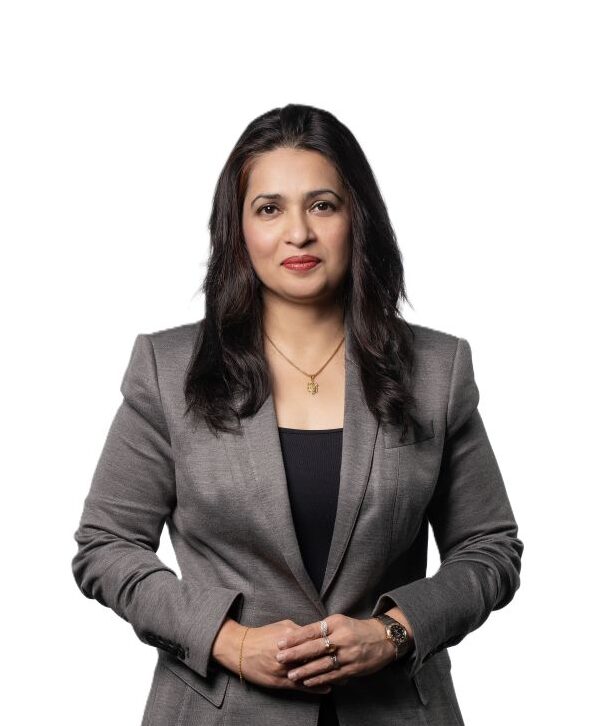
The Outlier Compliance Group team is thrilled to welcome our newest member, Divya Bhaktha.

Divya brings deep money services business (MSB) and banking experience.

Divya’s Bio

Divya joins the Outlier team with more than 15 years compliance experience working within the Money Services Business and Financial Institution sector. Throughout her career she has held both operational and oversight roles managing regulatory compliance and risk, contributing to the development and implementation of policies and procedures, conducting comprehensive internal compliance audits, effectiveness reviews, risk assessments and the training of team members, senior management and executives; with proven strengths in communication and building strong business relationships.

Divya got into compliance after a short role in accounting, her initial step into the world of AML/ATF was in 2009 when she was given an opportunity to handle the Compliance program for an MSB. In the same year, she gained her ACAMS designation and subsequently attended several ACAMS and MSB conferences to strengthen her knowledge. Once exposed to this world there was no looking back. She started by understanding the societal impact of money laundering and terrorist financing, the critical need for regulations and importance of compliance.

Her passion to get a broader exposure led her to gain experience at an FI and also in the crypto space. It was while working at the FI, that she became aware of something called “Bitcoin” which piqued her interest in crypto. Her experience has provided her with insights into the perspectives and challenges of both the MSB and FI sectors. She is enthusiastic about rethinking problems to uncover solutions and make operational success a reality.

As with all our consultants, Divya has deep subject matter expertise and supports Outlier’s mission statement “good compliance can enable good business”. She is passionate about compliance and risk management, and believes that businesses can be successful and compliant at the same time.

Please join us in welcoming Divya!

She’ll be attending the Futurist conference in Toronto as her first official Outlier event. Please say hello and welcome her to the team.

Interview with SafetyDetectives: A Deep Dive into AML and Data Privacy

In a candid interview with SafetyDetectives, Amber Scott and David Vijan, co-founders of Outlier Compliance Group, delve into the intricacies of anti-money laundering (AML) and data privacy in the evolving landscape of financial regulation. With backgrounds as former bankers turned compliance experts, Amber and David offer a unique perspective on the challenges and innovations shaping AML strategies today.

Can you please introduce yourself and talk about your role at Outlier?

Amber: Hi, I’m Amber Scott, the co-founder and CEO at Outlier Compliance Group. David and I were both previously bankers, working in the compliance space. For me, the idea for Outlier started once I left banking and started working in the consulting space. I saw how the leverage model worked, which was the idea that, essentially, if you throw enough smart folks at a problem, you can solve it. This was really different from the approach that Malcolm Gladwell espoused in his book Outliers, which is the idea that to be terribly good at something, you have to practice it a lot, roughly 10,000 hours.

When Outlier was founded, the idea was really that everyone on the team would have at least 10,000 hours of in-house compliance experience, so that people would understand compliance, how organizations work, and how operationalizing those concepts really worked in the long term.

David: Hi, I am David Vijan. I am a co-founder and CRO here at Outlier. We are an AML consulting firm, a compliance consulting firm, that specializes in AML, privacy, and other regulatory compliance consulting matters.

With financial crime tactics becoming more sophisticated, what sets your AML solution apart from others in detecting these threats?

Amber: I think it’s important to preface that our solutions are really consulting services, as opposed to software. When it comes to software, I won’t say that we’re exactly software agnostic, because we do recommend solutions and we always look for those solutions to be a good fit for our clients. However, in theory, we could work with any software solution.

I think that there are always two really important considerations.

  1. Does the software in question meet the regulatory requirements? Meaning, is it up to the regulator’s expectations in terms of what needs to be implemented.
  2. Does it manage the risk effectively?

Ideally, both of those conditions are met.

How does artificial intelligence and machine learning play a role in your solution’s detection and reporting capabilities?

David: As Amber mentioned, our wheelhouse is not in software related solutions per se. AI in general is great. We do have to remember the rule of garbage in, garbage out. That’s definitely something that we have to keep in mind here. AI really has to be understood by compliance staff.

We’ve seen compliance teams play around with AI, and they’re trying to develop policies and procedures using it. And while it does spit out something, it doesn’t have the level of detail that would meet the expectations of the regulator. It wouldn’t pass muster.

That’s a very important piece to the process, as it needs to be explainable to the regulator, but also meet their requirements and expectations. Because at the end of the day, it’s the regulator’s expectations that we’re really trying to satisfy.

Also, with AI, the rationale for decisions needs to be able to be translated into human-readable language. If you present something to someone, and they’re not able to recreate or understand it, it doesn’t really meet the needs of our regulatory obligations or the capabilities of what we need it to do.

Amber: This is incredibly important in an examination context with your regulator. If you’re an in-house compliance person, and you’re going to be called upon to explain how you came to a certain decision. The answer can’t be “I did what the robot told me to do”, “it came out of a black box”, or “we don’t understand the rationale for a decision”. It has to be something that you can translate to human-readable, human-understandable language, and that needs to be part of your documentation all the way down.

How do you approach data privacy and security, especially when dealing with sensitive financial data?

Amber: Amber: I think it’s important to acknowledge that there’s a natural tension between anti-money laundering (AML) and privacy. For us, at Outlier as a service firm, we consider it to be very important to minimize the amount of data and personal information that we ingest, particularly when we’re talking about our customer’s customer.

However, that’s not always practical or even possible for our clients who have very different requirements. From their perspective, it’s always important to understand:

  • Where the data lives across various systems
  • How you are using that data
  • How different systems are communicating with one another, both your own internal systems and your vendor systems, that you’re going to be using to do various functions.

Having a solid mapping of where that personal information, or PI, lives, and how that PI is used, is incredibly important and to keep that updated on a regular basis.

At the other end, not just knowing what’s happening during that lifecycle, but you need to have a plan to be able to anonymize or purge PI that’s no longer required, or no longer in use.

There’s this funny thing about data that when we’re holding on to personal information or sensitive information, the risk associated with that data never goes away. It can actually increase over time where the usefulness of that data decreases over time. So you have something that just stays risky but doesn’t stay useful to you. That alone needs to be a motivator to start to look at how we age off this data and how we move away from just retaining data forever. That doesn’t necessarily have a use for us. And that isn’t something that we could justify having if it were problematic.

David: Those are very important pieces. In our consulting services, we often see clients that don’t know where the data lives. It’s really important to understand where it’s mapped. Under privacy legislation, and we’re not really going to get into that, there are principles and one of them is limited use. Consent is given for a certain piece and sometimes we hear the business say, “Oh, well, we’ll use the data for something else later.” Well, there’s a whole other consent requirement you have to go back to. To Amber’s point, is there really a reason to hang on to data as it ages? Yes, in some cases, there are regulatory requirements, but we’ve seen data that goes back 10 – 20 years still in organizations systems. Is there a reason it’s still there and what is the risk? It’s probably not worth hanging on to it that long.

Can you discuss the significance of real-time monitoring versus batch processing in AML detection and reporting?

David: There definitely is value in having both approaches, and often you need both. Real-time is going to help with certain things such as fraud in progress, things that need to be captured right away. An example of that is listed person or sanctions. Those are transactions that you want to stop and that’s where real-time is going to really be important.

But sometimes batch reporting is needed because it actually learns. There are longer transaction patterns that it’s detecting, that will actually help you with different types of alerts. It’s important to look over those patterns over time and for those parameters to be changed. So that the system adapts over time and patterns become normal.

Amber: Absolutely. Nothing stays the same, except for the idea that things will change eventually.

That segues nicely to our next questions. How do you see the future of AML evolving, especially with the advent of new payment methods and financial technologies?

I think it’s important to say that monitoring at scale is impossible without technology solutions. We still, from time to time, see things where people are saying all of our monitoring is manual. I think we’re coming into a space where that’s not going to be the expectations of regulators at all. And it’s important to note that. There is an expectation that we’re using some kind of technology solution, and those solutions are going to continue to evolve.

The best solutions, in my opinion, consider the whole scope of a customer’s activity. This means their activity across different products and services. For example, if a customer has a mortgage, checking account, and credit card with us, we’re not looking at the risks of each of those products in isolation. We’re seeing the scope of the activity across all the products and services that the customer is using with us.

We’re also looking at the changes in patterns over time. We’re bringing in open-source intelligence or OSINT. So, what do we know about that customer from different potential sources? Where there’s virtual currency, we’re also looking at the risks that can be incurred from on-chain activity. If we know that a certain wallet is associated with that customer, we look at the risk of that wallet, not just in the transactions that are happening with our institution, but we’re able to monitor the general level of that wallet over time and what that wallet is interacting with.

Similarly, we can see connections between customers, so groups of people and entities that transact with each other, people that may own companies or entities together, sit on boards together, those types of things where you have multiple touchpoints between individuals. I think, in particular, if there’s one of those individuals that suddenly becomes high risk, that’s something that can trigger us to take a look at the other individuals to see if they may be involved in similar activity that would also change their risk ratings.

I think one of the biggest challenges is still data across various regions and across various languages. As we move more towards open banking and open data, I think this becomes very interesting because there are a number of external data points that we’ll be able to pull in and use in terms of monitoring and risk in very novel ways that we don’t necessarily see today.


 

Breach of Security Safeguards Regulations

Back in June of 2015, the Digital Privacy Act received royal assent, resulting in amendments to the Personal Information Protection and Electronic Documents Act (PIPEDA). Most amendments came into force at that time, except for the much-anticipated requirements related to breach notification. These requirements will come into force once regulations have been developed and put into place, and will affect any organization that collects, uses or discloses personal information in the course of commercial activities.

On September 2, 2017, a draft of those regulations was published in the Canada Gazette. The draft regulations will require organizations to report, to the privacy commissioner, any breach of security safeguards involving personal information under its control if it is reasonable to believe the breach creates a real risk of significant harm. The draft regulations state that such a report would have to contain the following:

  • a description of the circumstances of the breach and, if known, the cause;
  • the day or the period in which the breach occurred;
  • a description of the personal information that was involved in the breach;
  • an estimate of the number of individuals impacted – where the breach creates a real risk of significant harm;
  • the steps that the organization has taken to reduce the risk of harm to the impacted individuals;
  • the steps that the organization has taken or will take to notify impacted individuals; and
  • the name and contact information of a person who can answer, on behalf of the organization, the Privacy Commissioner’s questions about the breach.

Organizations that experience such a breach will also have to do the  following:

  • Determine if the breach poses a “real risk of significant harm” to any individual whose personal information was involved in the breach by conducting a risk assessment;
  • Notify affected individuals if it is determined that there is a real risk of significant harm. How the notification will take place depends on serval factors such as if contact information of the impacted individuals is known, cost, and if the method chosen to deliver such a notification will cause further harm;
  • Issue notification that contains:
    • a description of the circumstances of the breach;
    • the day or period during which the breach occurred;
    • a description of the personal information that was involved in the breach;
    • the steps that the organization has taken to reduce the risk of harm to the impacted individuals;
    • the steps that the impacted individuals could take to reduce the risk of harm resulting from the breach;
    • a toll-free number or email address that the impacted individuals can use to obtain further information about the breach; and
    • information about the organization’s internal complaint process and about the individual’s rights under PIPEDA, and that they can make a complaint with the privacy commissioner;
  • Notify other organizations or government institutions if they believe they may be able to reduce the risk of harm to the impacted individuals (i.e. law enforcement agencies). If this is the case, consent of individuals is not required for such disclosures; and
  • Keep records of any data breach for a minimum of 24 months.

The determination if there is a real risk of significant harm to an individual, and reporting “as soon as feasible” requirements, are likely to be the most challenging for organizations.

In determining if there is a “real risk of significant harm”, the assessment of risk conducted must consider factors such as the sensitivity of the personal information involved, whether or not the data was data encrypted, whether the personal information could be misused, if the information has been recovered, etc. The true risk of such factors may not always be known at the time that the risk assessment is first conducted. If not known, it may be best to use a worst case scenario in the assessment.

In reporting “as soon as feasible” after an organization determines that the breach has occurred, to both the Privacy Commissioner and impacted individuals, organizations may be hesitant to provide specific information. Reasons why organizations may be hesitant may include, details and information may change as further investigating of the breach is conducted, or for fear of litigation risk down the road. Additionally, there is reputational risk that organizations will be concerned about. When notifying the Privacy Commissioner, organizations may want to state that the investigation is ongoing and that updates will be provided in a timely manner. When notifying impacted individuals, organizations should ensure that all required information is contained in the notification. It is best to be transparent and truthful in such notifications, as not doing so may cause even greater litigation and reputational risk.

Regulatory Impact Analysis and Regulations

The draft regulations are open for a comment period, to read full details of the draft and the accompanying regulatory impact analysis statement please visit the Canada Gazette.

We’re Here To Help

If you have questions regarding this or any questions related to privacy legislation in general, please contact us.

Sanctions This Week: July 18th – 22nd, 2016

OSFIOutlier3_032

On July 18th and 22nd, 2016, the Office of the Superintendent of Financial Institutions (OSFI) released the United Nations Security Council’s (UNSC’s) Al’Qaida and Taliban regulations updates to the sanctions list, deleting one individual and amending another.

The individuals are subject to the assets freeze, travel ban and arms embargo set out in paragraph 2 of Security Council resolution 2253 (2015) adopted under Chapter VII of the Charter of the United Nations.

The review of the individual who was deleted from the list was triggered by regularly scheduled updates.  However, no additional information was available regarding the justification.

The amendment of one individual’s information included the following:

  • A physical description;
  • The confirmation of the most recent position held within the Taliban, as of April 2015; and
  • That they are currently involved in drug trafficking and operate a heroin laboratory in Afghanistan.

See the July 18th update on the United Nations (UN) website.

See the July 22nd update on the United Nations (UN) website.

Go to the OSFI lists page.

OFAC

The U.S. Department of Treasury’s Branch, The Office of Foreign Asset Control (OFAC), released three updates last week.  One update was related to the addition of three individuals to the Counter Terrorism Designations list.  The second update was related to the addition of multiple individuals and entities to the Syria and Non-proliferation Designations lists.  The final update last week was to the Kingpin Act and Panama-related Frequently Asked Questions (FAQs) regarding General Licenses.

OFAC administers and enforces economic and trade sanctions based on U.S. foreign policy and national security goals.  The sanctions target countries, regimes, terrorists, international narcotics traffickers, the proliferation of weapons of mass destruction, and other threats to the national security, foreign policy or economy of the U.S.

The changes to the Counter Terrorism Designations list included three individuals of different nationalities, Saudi Arabia, Egypt and Algeria, though all have been linked to Al Qa’ida.

The update to the Syria Sanctions list included eight individuals, all of whom are Syrian.  The seven entities, which range from construction, to finance to manufacturing industries and vary in location, which include:

  • Syria;
  • Saint Kitts and Nevis;
  • Cyprus;
  • UAE; and

The update to the Kingpin Act and Panama-related FAQs are specific General License 5B and 6B

See the Counter Terrorism Designations list update on OFAC’s website.

See the Syrian and Non-proliferation Designations lists update on OFAC’s website.

See the Kingpin Act and Panama-related General License FAQs update on OFAC’s website.

See OFAC’s recent actions page.

Need A Hand?

We would love to hear from you.  If there are subjects in this post that you would like to know more about, or if you need assistance with your compliance program, please contact us.

Sanctions This Week: July 11th – 15th, 2016

OSFIOutlier3_036

There were no updates released from OSFI this week.

Go to the OSFI lists page.

OFAC

The U.S. Department of Treasury’s Branch, The Office of Foreign Asset Control (OFAC), released one update last week.  The update was related to the addition of two Russian individuals who were added to the Counter Terrorism Designations list.

OFAC administers and enforces economic and trade sanctions based on U.S. foreign policy and national security goals.  The sanctions target countries, regimes, terrorists, international narcotics traffickers, the proliferation of weapons of mass destruction, and other threats to the national security, foreign policy or economy of the U.S.

No other information was available on the individuals who were added.

See the Counter Terrorism Designations list update on OFAC’s website.

See OFAC’s Recent Actions page.

Need A Hand?

We would love to hear from you.  If there are subjects in this post that you would like to know more about, or if you need assistance with your compliance program, please contact us.

Sanctions This Week: July 4th – 8th, 2016

OSFISanctions Pic

On July 5th, 2016, the Office of the Superintendent of Financial Institutions (OSFI) released the United Nations Security Council’s (UNSC’s) Al’Qaida and Taliban regulations update to the sanctions list, removing one individual.

Individuals who are included in the list are subject to the assets freeze, travel ban and arms embargo set out in paragraph 2 of Security Council resolution 2253 (2015) adopted under Chapter VII of the Charter of the United Nations. The individual delisted was decided following a review, initiated by a request that was submitted to the Ombudsperson.  The individual is a German national and has been imprisoned in Germany since 2007.

See the update on the United Nations (UN) website.

Go to the OSFI lists page.

OFAC

The U.S. Department of Treasury’s Branch, The Office of Foreign Asset Control (OFAC), released three updates last week.  The first update, released on July 5th, 2016 was related to the settlement of a potential civil liability for apparent violations of the Iranian and Sudanese transactions and sanctions regulations.  The second update was related to the addition of multiple North Korean individuals and entities to the North Korean Designations List.  The final update was further clarification to the new Cuba-related Frequently Asked Questions (FAQ).

OFAC administers and enforces economic and trade sanctions based on U.S. foreign policy and national security goals.  The sanctions target countries, regimes, terrorists, international narcotics traffickers, the proliferation of weapons of mass destruction, and other threats to the national security, foreign policy or economy of the U.S.

The settlement on July 5th for apparent violations of the Iranian and Sudanese sanctions was levied against Alcon Laboratories, Inc., Alcon Pharmaceuticals Ltd., and Alcon Management SA.  In the course of the investigations, Alcon produced documents and information where it appeared that from August 2008 to December 2011, Alcon violated Iranian sanctions on 452 occasions and Sudanese sanctions on 61 occasions.  Alcon engaged in the sale and exportation of medical end-use surgical and pharmaceutical products from the United States to distributors located in Iran and Sudan without OFAC authorization. OFAC determined that Alcon did not make a voluntary self-disclosure and that the apparent violations were not egregious. The statutory maximum civil monetary penalty amount for the Apparent Violations was $138,982,584 USD and the base penalty amount was $16,927,000 USD.  Ultimately, Alcon paid $1,317,150 USD.

The North Korean sanctions list update included numerous individuals and entities, some of whom are high-ranking officials with titles such as:

  • Director of the Fifth Bureau of the Reconnaissance;
  • Director of the Workers’ Party of Korea Propaganda and Agitation Department; and
  • Minister of People’s Security.

The update to the Cuba-related FAQs were specific to the issuance of two new questions added, #43 and #50, regarding the use of the U.S. dollar in certain transactions.

See the Enforcement Action update on OFAC’s website.

See the North Korea Designations List update on OFAC’s website.

See the Cuba-related FAQ update on OFAC’s website.

See OFAC’s Recent Actions page.

Need A Hand?

We would love to hear from you.  If there are subjects in this post that you would like to know more about, or if you need assistance with your compliance program, please contact us.

Return to Blog Listing